The information on this website is general in nature and does not take into account your objectives, financial situation, or needs. Consider seeking personal advice from a licensed adviser before acting on any information.
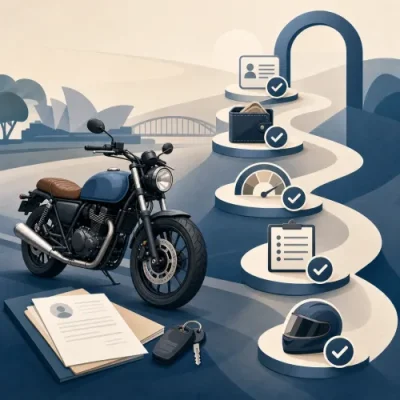
Applying for motorbike finance usually involves more than choosing a bike and requesting a loan amount. Australian lenders may assess your identity, income, expenses, credit history, employment, residency status and motorcycle details before deciding whether to offer finance.
Understanding motorcycle loan requirements in Australia can help you prepare before you apply and reduce avoidable delays. While every lender has its own criteria, most motorbike finance applications involve a review of your identity, financial position, credit history and the motorcycle you want to buy.
This guide explains the information and documents commonly requested when you apply for motorbike finance. It is general information only and does not take your personal objectives, financial situation or needs into account. Loan eligibility, pricing and approval outcomes depend on your circumstances and the lender's assessment criteria.
If you are still at the early stage, you can start with the Bike Loan Finance Online eligibility assessment to understand what information may be relevant before moving further into an application.
What lenders commonly assess in a motorcycle loan application
When you apply for a motorcycle loan, a lender is generally trying to understand whether the loan is affordable and whether the application meets its credit policy. For consumer loans in Australia, lenders may also need to make reasonable inquiries about your financial situation and take steps to verify information before offering credit.
Common assessment areas include:
- Identity: whether you are who you say you are and whether your details can be verified.
- Age and legal capacity: whether you are old enough to enter into a credit contract.
- Residency or visa status: whether your status meets the lender's requirements for the loan term.
- Income: how much you earn, how regular it is and whether it can be verified.
- Employment or business stability: your job type, length of employment, business history or income source.
- Living expenses: regular household costs and discretionary spending that affect repayment capacity.
- Existing debts: credit cards, personal loans, car loans, buy now pay later facilities, mortgages and other commitments.
- Credit history: repayment conduct, credit enquiries, defaults or other credit file information.
- Motorcycle details: the bike's price, age, condition, seller, registration status and suitability as security if the loan is secured.
Motorbike finance eligibility: common starting criteria
Eligibility criteria vary between lenders, but many motorcycle loan applications begin with a few basic requirements. These are not a guarantee that finance will be offered; they are simply common starting points.
Age
Applicants generally need to be at least 18 years old to enter into a credit contract in Australia. Some lenders may also consider whether the applicant has sufficient independent income and credit history to support the requested loan.
Australian residency or visa status
Lenders may ask whether you are an Australian citizen, permanent resident or eligible visa holder. If you are on a temporary visa, the lender may consider the visa type, expiry date and whether the proposed loan term fits within the period you are allowed to remain and work in Australia.
Income and employment
A lender will usually need to see that you have a reliable source of income. This may include wages, salary, self-employed income, contract income, rental income or some forms of government payments, depending on the lender's policy.
Employment status can also matter. Full-time, part-time, casual, contract and self-employed applicants may be assessed differently because the lender may need different evidence to understand income stability.
Licence and riding requirements
A lender may ask whether you hold a motorcycle licence or learner permit, particularly where the motorcycle is intended for personal use. Licensing rules are set by state and territory authorities and can affect the type of motorcycle you are legally allowed to ride. Lenders may not always require the same licence evidence, but you should make sure the bike you are buying is appropriate for your licence class and intended use.
Information usually requested when you apply for motorbike finance
A formal motorcycle loan application commonly asks for detailed information so the lender can assess affordability and verify key facts. The exact questions differ by lender, broker and loan type.
| Information category | Examples of what may be requested | Why it may matter |
|---|
| Personal details | Full name, date of birth, phone number, email and residential address history | Helps verify your identity and contact details |
| Residency details | Citizenship, permanent residency or visa information | Helps the lender assess eligibility and loan term suitability |
| Employment details | Employer name, role, employment type and length of employment | Helps assess income stability |
| Income | Salary, wages, business income, overtime, allowances or other accepted income | Helps determine repayment capacity |
| Expenses | Rent, mortgage payments, utilities, transport, groceries, insurance and other living costs | Helps assess whether repayments are affordable |
| Existing liabilities | Credit cards, personal loans, car loans, buy now pay later accounts and other debts | Shows current repayment commitments |
| Assets | Savings, property, vehicles or other significant assets | May help complete your financial profile |
| Loan request | Amount to borrow, preferred loan term, deposit or trade-in details | Helps structure the proposed finance |
| Motorcycle details | Make, model, year, price, seller, registration and identification details | Important for valuation and security assessment |
Motorcycle loan application documents to prepare
Having documents ready can make the application process smoother. You may not need every document listed below, but these are commonly requested at some stage of a motorcycle loan application.
Identity documents
Lenders may ask for documents that verify your name, date of birth and address. Examples can include:
- Australian driver licence or motorcycle licence;
- passport;
- Medicare card;
- proof of age card;
- recent utility bill, rates notice or other address evidence.
Some lenders use electronic identity verification, while others may ask you to upload copies of documents. Do not provide documents through unsecured channels or to parties you have not verified.
Income documents
The documents needed to prove income depend on how you earn money.
| Applicant type | Documents that may be requested |
|---|
| PAYG employee | Recent payslips, employment contract, bank statements showing salary credits or an income statement |
| Casual or part-time employee | Recent payslips, bank statements and evidence of regular hours or income history |
| Self-employed applicant | Tax returns, financial statements, business bank statements, BAS documents or accountant-prepared information |
| Contractor | Current contract, invoices, bank statements, tax returns or evidence of ongoing work |
| Other income sources | Rental statements, payment summaries, benefit statements or other evidence accepted by the lender |
Not all income types are treated the same way. A lender may discount irregular income, ask for a longer history or exclude income it cannot verify.
Bank statements
Many lenders request recent bank statements to confirm income deposits, regular expenses and repayment behaviour. Bank statements may show salary credits, rent or mortgage payments, subscriptions, transfers, gambling transactions, dishonours or other spending patterns relevant to an affordability assessment.
Debt and liability evidence
You may be asked to disclose or verify existing debts. This can include credit card limits, personal loan repayments, car loans, store finance, buy now pay later arrangements and child support obligations. Lenders may consider the full credit card limit, not just the current balance, when assessing commitments.
Motorcycle purchase documents
If you have chosen a bike, you may need documents relating to the purchase. These can include:
- a dealer invoice or purchase contract;
- private sale agreement;
- make, model, year and odometer reading;
- VIN, chassis number or engine number;
- registration details, where available;
- seller details;
- deposit or trade-in evidence;
- insurance information if required by the lender.
For a used motorcycle or private sale, a lender may carry out additional checks, including valuation or security checks. The process may take longer if the bike's details are incomplete or inconsistent.
Secured loan requirements may be different from unsecured loan requirements
Motorcycle finance may be structured as a secured or unsecured loan. With a secured loan, the motorcycle is generally used as security for the loan. With an unsecured loan, the bike is not used as loan security, although the lender will still assess your ability to repay.
Secured motorcycle loans may involve extra requirements, such as:
- the motorcycle meeting the lender's age, condition or valuation criteria;
- verification of the bike's VIN, registration or purchase invoice;
- confirmation that the seller can provide clear title;
- registration of the lender's security interest;
- comprehensive insurance being arranged or maintained, if required under the loan terms.
Unsecured loans may involve fewer vehicle checks, but the lender may place more weight on your income, credit profile and overall repayment capacity. If you are comparing structures, it may help to read more about secured and unsecured motorcycle loans before deciding what type of finance to apply for.
Credit checks and repayment history
A formal motorcycle loan application will often involve a credit check. This may appear on your credit report as a credit enquiry. Lenders may review information such as existing credit accounts, repayment history, defaults, hardship arrangements, court judgments, bankruptcy information or recent credit enquiries, depending on what is available and relevant.
A past credit issue does not automatically mean every application will be declined, but it can affect which lenders may consider the application, the information requested and the loan terms offered. Be accurate and upfront about known credit issues, as inconsistencies can slow the process or affect the lender's decision.
If you are not ready for a formal application, learning about motorcycle loan pre-qualification may help you understand the difference between an initial estimate and a full credit assessment.
How expenses and affordability are assessed
Loan approval is not based only on whether you earn enough to cover the monthly repayment. Lenders may assess the overall affordability of the proposed loan after considering your living costs and existing commitments.
Expenses that may be considered include:
- rent or mortgage payments;
- utilities, groceries and transport;
- insurance, registration and maintenance costs;
- school fees or childcare;
- medical costs;
- credit card and loan repayments;
- subscriptions and other regular spending.
Motorcycle ownership can also involve costs beyond the loan repayment, such as protective gear, servicing, tyres, registration, insurance and fuel. Before applying, you may want to test different loan amounts and repayment scenarios using a loan calculator. A calculator is only an estimate, but it can help you think through affordability before making a formal application.
What can slow down a motorcycle loan application?
Some delays are unavoidable, but many application issues come from missing, unclear or inconsistent information. Common causes of delays include:
- name, address or date of birth details not matching identity documents;
- missing payslips, bank statements or tax documents;
- income deposits that do not match the stated income;
- undisclosed debts or credit cards;
- private sale motorcycles with incomplete vehicle details;
- unclear ownership or finance owing on the motorcycle;
- expired identification documents;
- bank statements showing irregular income or dishonoured payments that need explanation;
- loan amount, deposit or purchase price changes after the application is lodged.
Providing accurate information from the start does not ensure approval, but it may reduce back-and-forth requests and help the lender assess the application more efficiently.
Checklist before you apply for a motorcycle loan
Before submitting a formal application, it can be useful to work through a simple preparation checklist.
- Confirm your budget: consider the loan repayment as well as registration, insurance, maintenance and riding gear.
- Check your details: make sure your name, address and employment information are current and consistent.
- Gather identity documents: have current ID available in the form requested by the lender or broker.
- Prepare income evidence: collect recent payslips, bank statements or self-employed documents as relevant.
- Review existing debts: know your credit card limits, loan balances and repayment amounts.
- Choose the motorcycle carefully: have the invoice, seller details and vehicle information ready if you have selected a bike.
- Consider the loan structure: understand whether you are applying for secured or unsecured finance.
- Be accurate: provide complete information and update the lender if your circumstances change.
Final thoughts
Motorcycle loan approval requirements are not identical across Australia because each lender applies its own credit policy and assessment process. However, most applications involve the same broad themes: identity, income, expenses, credit history, employment stability and motorcycle details.
Preparing your documents early can help you approach the process with clearer expectations. It can also help you identify questions to ask before you apply, such as what documents are required, whether the loan is secured, what fees may apply, how repayments are structured and what happens if your circumstances change during the loan term.
Published: Wednesday, 26th Aug 2026
Author: Paige Estritori




No comments yet. Be the first to share your thoughts.